315 Amherst Drive: Discover Modern Comfort in a Cozy Kingston Bungalow
Luxury Living with Easy Accessibility
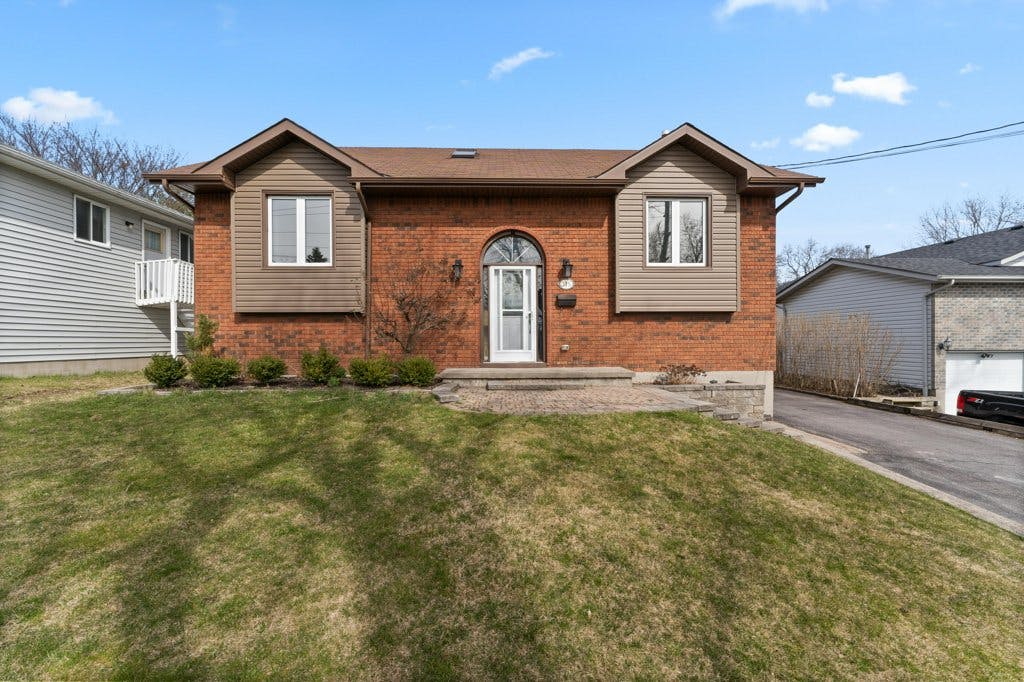
At the appealing price of $570,000, 315 Amherst Drive features four spacious bedrooms and offers a seamless blend of convenience with its thoughtfully designed levels. The main level is perfect for everyday activities, while the lower level is ideal for private offices or quiet study areas. Discover more about our listings for additional insights.
Family-Centric Design
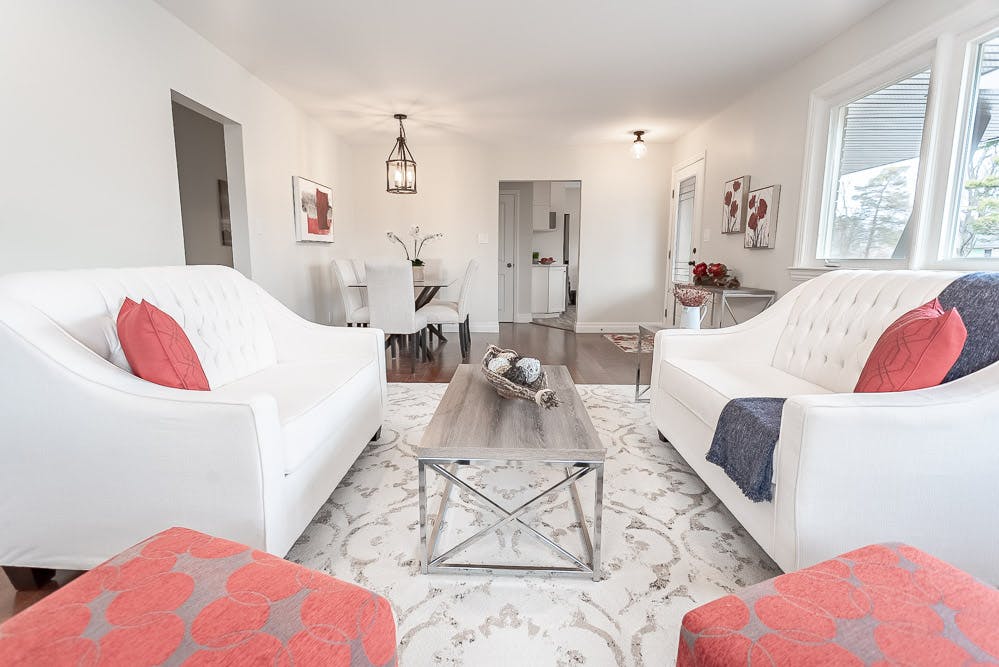
The heart of the home is a cozy living room with a warm fireplace that creates an inviting atmosphere for family gatherings during Kingston’s cooler months. The adjacent expansive family room is tailor-made for entertainment, from movie nights to casual lounging.
Updated Kitchen: A Chef’s Dream
The kitchen at 315 Amherst Drive has been beautifully updated with stainless steel appliances and elegant cabinetry. The adjoining dining area provides serene views of the lush backyard, ideal for family meals and guest entertainment. Check out our latest blog on kitchen designs.
Outdoor Living at Its Best
Step outside to a spacious outdoor retreat at 315 Amherst Drive. The large deck and above-ground pool offer a private oasis for al fresco dining and sunny day enjoyment. This space is perfect for both hosting gatherings and peaceful afternoons.
Community and Convenience
Located a short walk from the W.J. Henderson Recreation Centre and close to essential amenities like parks, playgrounds, and schools, 315 Amherst Drive ensures a connected community life. For more information, visit our community events page.
When it comes to selling a house in Kingston, Ontario, understanding the legalities involved is crucial for a smooth and successful transaction. The expertise of a seller’s lawyer becomes indispensable, guiding homeowners through the complex legal landscape of real estate sales. This post explores the critical responsibilities of a seller’s lawyer in Kingston, emphasizing their importance in protecting your interests throughout the sale process.
Navigating Legal Requirements When Selling a House in Kingston, Ontario
Legal Document Preparation and Review: The legal journey of selling your property in Kingston begins with the meticulous preparation and review of essential documents. A seller’s lawyer ensures that every legal document, from the Agreement of Purchase and Sale to the property deed, is thoroughly examined and prepared, setting the foundation for a legally sound sale.
Ensuring a Clear Title in Kingston’s Real Estate Market
A clear title is paramount when selling your Kingston home. Seller’s lawyers conduct detailed searches to uncover any liens, encumbrances, or outstanding mortgages that could block the sale, addressing these issues promptly to ensure a smooth ownership transition. This step is vital for maintaining the integrity of real estate transactions in Kingston.
Coordinating with Mortgage Lenders for Your Kingston Property Sale
For many homeowners, managing an existing mortgage is a part of the selling process. Seller’s lawyers in Kingston work closely with mortgage lenders to ensure the mortgage is discharged at the sale, using the proceeds to clear any remaining balance. This is crucial for transferring ownership free of financial encumbrances.
Closing Coordination: The Final Steps in Selling Your Kingston Home
The closing of your home sale in Kingston is a critical phase, requiring exact coordination. Seller’s lawyers manage this process, ensuring all legal and financial conditions are met for a successful transaction closure.
Financial Reconciliation and Transfer of Ownership
The financial reconciliation through the statement of adjustments is a key aspect of selling a house in Kingston, Ontario. This process, overseen by the seller’s lawyer, ensures financial transparency and equity in the sale, culminating in the final transfer of funds and ownership. This step solidifies the new ownership in the Ontario Land Registry records, marking the successful conclusion of the sale.
The Indispensable Role of a Seller’s Lawyer in Kingston’s Real Estate Market
In Kingston’s bustling real estate market, a seller’s lawyer stands as a pillar of legal expertise and protection. From drafting vital documents to the final ownership transfer, their comprehensive services ensure homeowners can navigate the sale process with confidence and legal assurance. Engaging with a skilled seller’s lawyer is essential for anyone looking to sell their home in Kingston, Ontario, ensuring a smooth and stress-free real estate transaction.
In conclusion, the process of selling a house in Kingston, Ontario, involves navigating a complex legal landscape where the expertise of a seller’s lawyer is invaluable. Their role is pivotal in ensuring the transaction is legally sound, , and facilitating a smooth transfer of property ownership. For a successful real estate venture in Kingston, partnering with a reputable seller’s lawyer is not just advisable—it’s essential.
If you are looking for a recommendation for a real estate lawyer in the general Kingston, ON region we can help. Contact us at your convenience.
As the snow gently melts away and the first green buds begin to appear, there’s no place more inviting than a cozy cottage north of Kingston, Ontario. The thought of having a tranquil sanctuary nestled by the lake is especially appealing as we emerge from the quiet of winter. Let’s explore why the vibrant season of spring is your golden opportunity to embrace the cottage lifestyle of your dreams.
Spring whispers a secret advantage to those dreaming of cottage life: the chance to find your perfect retreat before everyone else. As the air warms, competition for those precious lakeside spots heats up. Choosing spring for your cottage search lets you calmly select your haven with less pressure and, quite possibly, at a better price.
Summer Days by the Lake
All Yours, From Day One
Imagine an entire summer of sun-drenched mornings and quiet, starry nights at your very own lakeside getaway. Securing your cottage in spring means not a single day of summer bliss is missed. Whether it’s barbecues, boat rides, or simply basking in nature’s silence, your retreat is ready to fill your days with joy from the very start of the season.
Seeing Clearly
A Perfect View for a Perfect Choice
With the thawing of winter comes the perfect clarity to view potential cottages. No snow to obscure your view, no ice to hide the shoreline; just the unmasked beauty of your prospective home and its surroundings. It’s the ideal time to inspect every nook and cranny, ensuring your decision is as informed as it can be.
Make It Yours
Time for a Personal Touch
Buying in spring not only opens the door to early enjoyment but also grants you the luxury of time to add those personal touches that transform a cottage into yourcottage. Whether it’s planting a garden, enhancing the deck, or interior decorations, the longer days are your canvas to create a haven that truly reflects your spirit.
The Awakening of Nature
Be Part of the Rebirth
There’s a magic in spring in Ontario that words can hardly do justice. It’s a time when nature awakens in a burst of life and color, with wildlife stirring and flowers blooming. As a new cottage owner, you become a privileged observer to this wonderful renewal, right at your doorstep. It’s the perfect setting for new beginnings.
In Conclusion
Spring brings not just a renewal of nature, but a chance for you to start afresh with a cottage life that’s been calling your name. Beyond the practical benefits of timing and choice, it’s about stepping into a lifestyle where every day is an invitation to relax, explore, and enjoy the natural beauty around you. Let this spring be the start of your cottage dream coming true.
For more inspiration and to discover the perfect spot for your own slice of paradise, explore here.
Ready to take the next step towards your dream cottage or have questions about lakeside living? We’d love to help you navigate your journey. Contact us today, and let’s make your dream a reality together.
Preparing your home for the market is an exciting yet challenging journey. Home staging plays a crucial role in not just showcasing your home’s beauty but also in capturing the hearts and offers of potential buyers. Whether you’re a seasoned seller or a first-time home-stager, these essential home staging tips will guide you towards a swift and profitable sale.
Inside: Declutter and Simplify with Love
Brighten Your Space: Maximizing natural light can transform any room. Remove window screens and let the sunshine flood in, creating a warm and welcoming environment.
Dining Area Makeover: A simplified dining setup can speak volumes. Consider a minimalistic approach to allow buyers to imagine their own family gatherings.
Neutralize Window Treatments: Style-specific drapes can deter potential buyers. Swap them out for neutral, light-colored curtains that enhance the room’s appeal.
Minimize Decor: Aim for a serene, clutter-free look. Less is more when it comes to personal decor, allowing buyers to envision their own future in the space.
Update Floral Accents: Modern artificial plants or cheerful, easy-care live plants can add a splash of life to your interiors.
Personal Touches: While personal photos and certificates are treasures, storing them away allows buyers to picture their own memories here.
Closet Organization: Show off your storage spaces by keeping closets neat and organized, demonstrating the care and space available.
Kitchen and Bathroom Declutter: A clear counter signals a spacious area. Aim for minimalism in these crucial rooms.
Outside: First Impressions Count
Front Door Facelift: A clean, freshly painted front door with a new welcome mat can set the tone for the entire viewing.
Gardening: Well-maintained gardens and neat sidewalks not only invite admiration but also suggest meticulous care extends to the outdoors.
Maintenance: Clearing overgrown plants and ensuring the exterior is well-maintained improves your home’s curb appeal dramatically.
Pressure Washing: A thorough clean of your home’s exterior can make it look brand new, significantly enhancing first impressions.
The Heart of Staging
Remember, the essence of home staging is to craft a welcoming space where buyers can effortlessly envision their new life. It’s about more than just aesthetics; it’s about creating an emotional connection and a sense of potential. With these strategic tips, your home will not only look its absolute best but will also stand out in the market, ensuring a quicker, more profitable sale.
Welcome to our February 2024 update on Kingston’s real estate market! It’s an exciting time for both home buyers and sellers as we see some interesting changes. Our goal is to give you a clear picture of what’s happening in the market, along with some insights into where things might be heading.
Let’s dive into the details together.
What’s Happening Right Now?
Homes Coming Up for Sale:
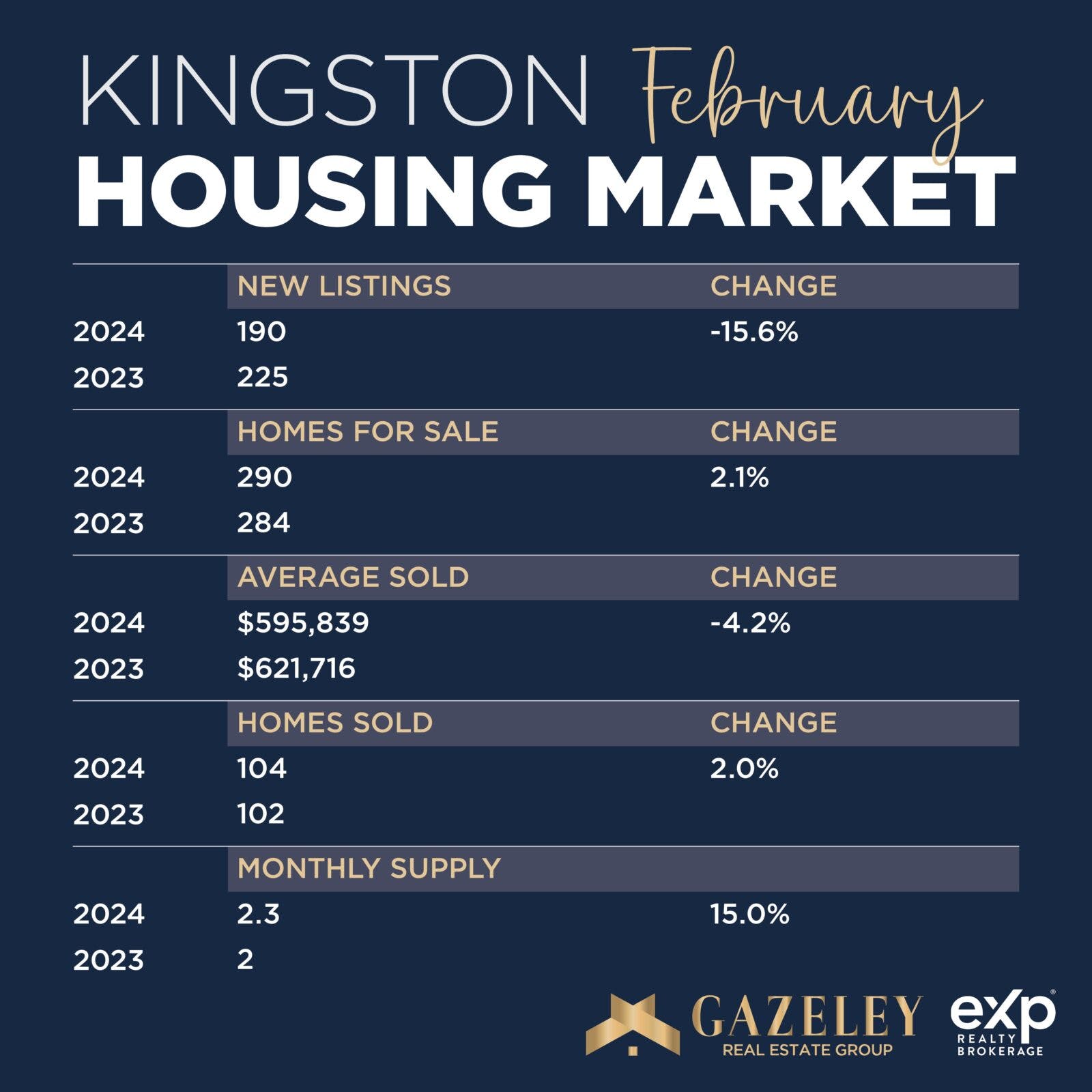
In February, we noticed fewer new homes listed for sale compared to last year – 190 this year versus 225 last year. This means there are slightly fewer choices right off the bat, but don’t worry, there’s more to the story. The total number of homes available to buy actually increased a little bit to 290. So, while there are fewer new listings, the overall selection is getting better.
How Much are Homes Selling For?
There’s been a bit of a shift in prices too. The average selling price has come down a bit to $595,839 from last year’s $621,716. But, looking at the brighter side, prices picked up a bit from last month, showing that the market is holding strong and people are still keen on buying.
Are People Buying Homes?
Yes, they are! In fact, 104 homes were sold in February, which is a good sign of activity in the market. This shows that despite the ups and downs, people are actively buying homes, making it a lively market.
What Does the Supply Look Like?
There’s a little more breathing room now with a supply of homes lasting about 2.3 months, up from 2.0 months last year. This means buyers might have a few more options to choose from and a bit more time to make their decisions.
Looking Forward: Insights and Predictions
Interest Rates and the Economy:
The market is also influenced by interest rates and the economy. Lower interest rates can make borrowing cheaper, encouraging more people to buy homes. However, if rates go up, it might slow things down a bit. Kingston’s job market and population growth are also big factors. A strong job market and more people moving to Kingston can keep the demand for homes high.
On March 6, 2024, the Bank of Canada announced that its key interest rate would remain at five percent, where it has stayed since July. Many economists anticipate the first interest rate cut will come in July, given that the inflation rate is holding within the bank’s target range. So, for homeowners facing mortgage renewal this year it might still be beneficial to choose a shorter-term mortgage so that when rates do come down, they can take advantage of better rates. This is a great discussion to engage in with your mortgage agent.
What’s Next for 2024 and Beyond?
We’re expecting the market to find a nice balance in the coming months. Prices might not swing too wildly, and there should be a steady flow of homes to choose from. This could be great for both buyers and sellers, offering fair prices and enough options.
Conclusion
Navigating the Kingston real estate market in February 2024 is like setting off on an adventure with a good map in hand. There are plenty of opportunities for buyers to find their dream home and for sellers to get a fair price. With a bit of patience and the right information, everyone can make a move that feels just right.
We’re here to help guide you through these exciting times with a friendly and professional approach. Whether you’re looking to buy your first home or sell your property, the journey ahead is filled with promise.
As we embark on the adventure that is 2024 at the Gazeley Real Estate Group, optimism permeates the air, casting a hopeful light on the residential real estate horizon. This year holds the promise of measured growth and positive changes in the sector, where we are delighted to guide you through the process of finding your dream home or facilitating the sale of your cherished property.
A home is more than bricks and mortar; it’s a haven, a place where you build connections and become an integral part of your community. Kingston’s growth, welcoming nearly 13,000 new residents in the last decade, sets the stage for an exciting real estate journey.
Excitement abounds in our industry, with a pivotal development on December 1st, 2023—the introduction of Phase 2 of TRESA, the Trust in Real Estate Services Act. This phase, dedicated to safeguarding the interests of both buyers and sellers, raises the professional standards of realtors and brokerages. Ontario now proudly leads North America in setting a new benchmark for excellence in real estate services.
At the inception of the Gazeley Real Estate Group, our commitment to doing right by you was unwavering. Shaped by our upbringing and life experiences, our core values—honesty, integrity, and transparency—are the guiding principles that define us. We strive to be good neighbours, contributing to the well-being of our community. Our philosophy incorporates an enjoyable work atmosphere, infusing fun into every aspect of our lives, from the workplace to family and friends. Hard work and an obsession with detail are the cornerstones of our dedication to delivering exceptional service.
As we look ahead to 2024, optimism prevails. If you’ve longed for a higher standard in real estate, consider this your moment. The Gazeley Real Estate Group is poised to navigate these positive changes, ensuring that your journey in the real estate market is not just a transaction. We build relationships for the long term, one client at a time. Here’s to a bright and prosperous 2024!
Welcome to the Kingston Housing Market Report for December 2023. As we close the year, it’s essential to reflect on the trends that shaped the real estate landscape in Kingston and explore the opportunities they present.
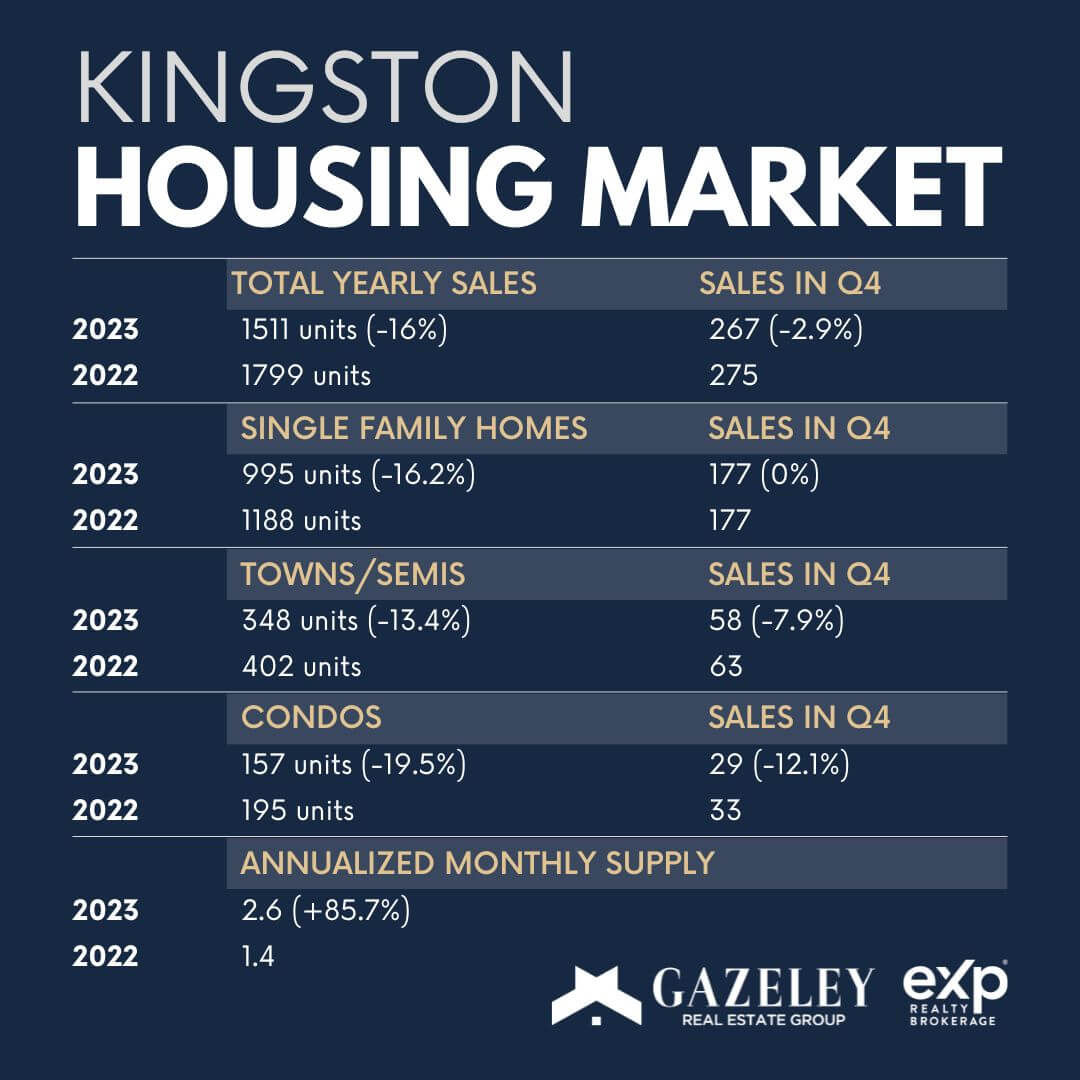
Total Yearly Sales:
2023: 1511 units (-16%)
2022: 1799 units
The Kingston housing market experienced a 16% decrease in total yearly sales in 2023 compared to the previous year. This decline, while noteworthy, invites a closer examination of the market dynamics.
Sales in Q4:
2023: 267 (-2.9%)
2022: 275
In the fourth quarter of 2023, the market saw a marginal decrease of 2.9% in sales compared to the same period in 2022. This suggests a relatively stable performance during the final quarter of the year.
Single Family Homes:
2023: 995 units (-16.2%)
2022: 1188 units
Single-family homes, a significant segment of the market, experienced a 16.2% decrease in sales in 2023.
Sales in Q4:
2023: 177 (0%)
2022: 177
The fourth quarter of 2023 saw sales of single-family homes remaining consistent compared to the same period in 2022.
Towns/Semis:
2023: 348 units (-13.4%)
2022: 402 units
Sales of towns and semis decreased by 13.4% in 2023. This segment, while showing a decline, remains a significant part of the Kingston housing market.
Sales in Q4:
2023: 58 (-7.9%)
2022: 63
In the fourth quarter of 2023, towns and semis experienced a 7.9% decrease in sales compared to the same period in the previous year.
Condos:
2023: 157 units (-19.5%)
2022: 195 units
Condo sales experienced a decrease of 19.5% in 2023, signaling perhaps a shift in buyer preferences.
Sales in Q4:
2023: 29 (-12.1%)
2022: 33
In the fourth quarter of 2023, condo sales decreased by 12.1%, reflecting a continued trend of reduced demand in this segment.
Annualized Monthly Supply:
2023: 2.6 (+85.7%)
2022: 1.4
The annualized monthly supply in 2023 increased significantly by 85.7%, indicating a higher inventory relative to the demand compared to the previous year.
Conclusion:
As we conclude 2023, the Kingston housing market has shown a mix of trends, with decreases in total yearly sales and sales across various housing types. The increased annualized monthly supply is attributed to a shifting balance between supply and demand.For those considering entering or navigating the Kingston real estate market, a nuanced understanding of these trends is crucial. As always, seeking professional advice and staying informed about market dynamics will be key to making well-informed real estate decisions.
Wishing you a prosperous 2024 in your real estate endeavours!
If you would like to discuss real estate or find out your home value just let us know!
Introduction – Kingston & Area Real Estate Market October 2023:
As the vibrant hues of autumn paint our landscapes and October gracefully exits the stage, join us for a fascinating exploration into the ever-evolving world of Kingston & Area’s real estate. In a market gradually tilting in favour of homebuyers, staying ahead of the curve becomes more crucial than ever. In this blog post, we’ll meticulously dissect the month-end real estate statistics for October 2023, shedding light on the exciting transition towards a buyer’s market.
October 2023 vs. October 2022: A Transformative Year
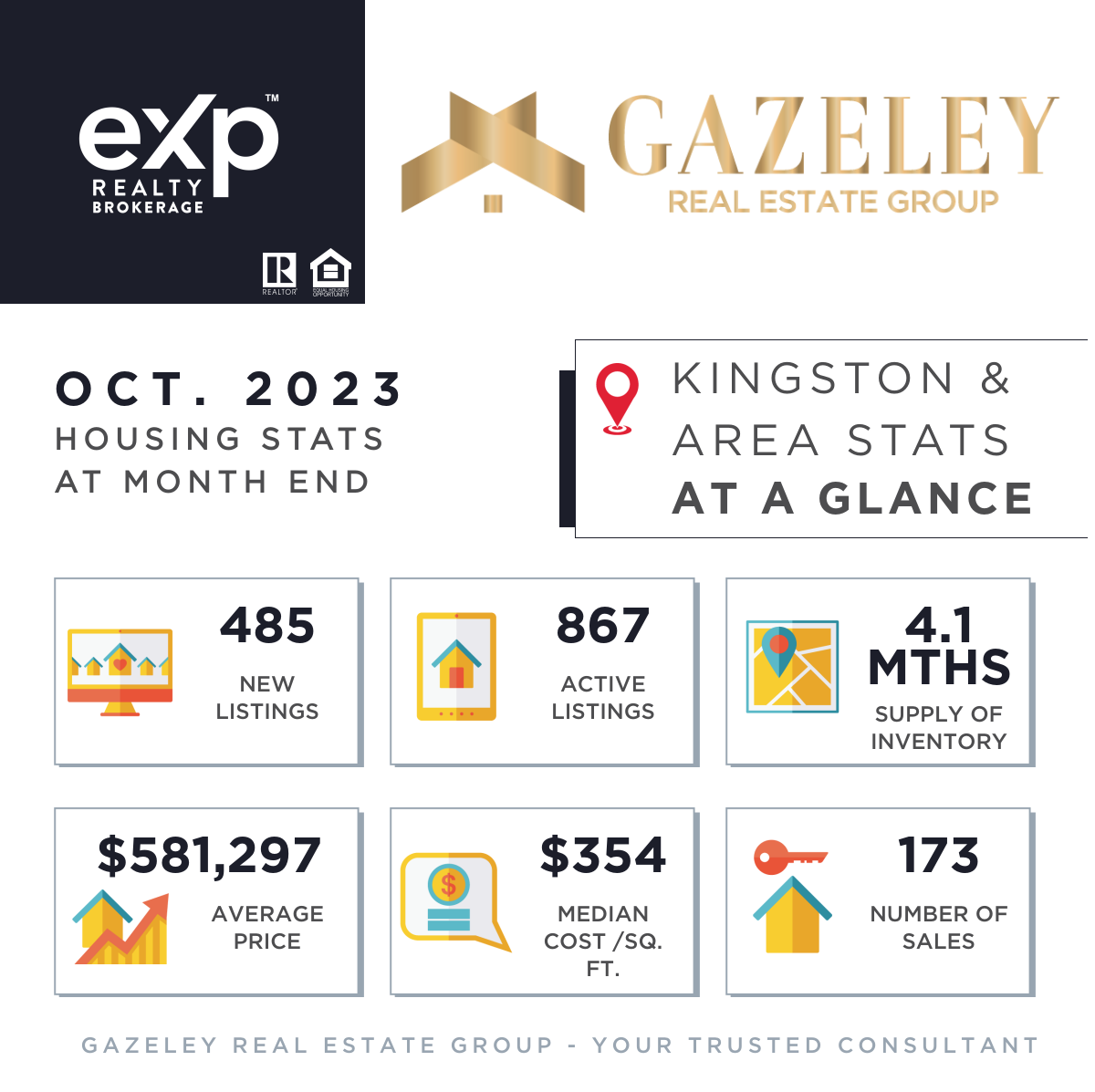
New Listings: October 2023 witnessed a surge with 485 new listings, a robust increase from the 414 recorded in October 2022. This surge signifies a growing activity among homeowners eager to showcase their properties, ushering in a shifting market landscape.
Active Listings: In October 2023, the number of active listings soared to 867, a substantial leap from the 654 active listings a year ago. This surge reflects a notable shift in market dynamics, gifting potential buyers a diverse array of options.
Supply of Homes: The supply of homes, measured at 4.1 months in October 2023, tips the scales in favour of buyers. Compare this to the 2.5 months’ supply in October 2022, and the message is clear – the market is evolving towards a buyer’s advantage.
Average Price: October 2023 recorded an average home price of $581,297, a gentle decrease from the $602,873 of October 2022. This adjustment suggests a market that’s finding its equilibrium, offering a balanced playing field for both buyers and sellers.
Number of Sales: Closing October with 173 sales, the month outpaced the 169 transactions in October 2022. This uptick in sales, coupled with other market indicators, contributes to the narrative of Kingston & Area gracefully embracing a buyer’s market.
Understanding the Shift:
The real estate landscape in Kingston & Area is undergoing a noticeable transformation, favouring homebuyers. With a surge in new listings, increased active inventory, and a more balanced supply-demand ratio, the market is becoming a haven for those stepping into the real estate arena.
Navigating the Change:
This shift is a golden opportunity for prospective buyers to explore a broader spectrum of properties and negotiate confidently. Sellers, the key is strategic pricing and showcasing your property’s unique allure in a market that offers buyers an array of choices.
Connect with Gazeley Real Estate Group:
Embarking on a real estate journey? The Gazeley Real Estate Group, armed with over 25 years of expertise, is your guiding light. Navigate the evolving Kingston & Area real estate market confidently with our personalized guidance for both buyers and sellers. Connect with us today by exploring the latest listings on our website here.
Conclusion:
October 2023 signifies more than the falling leaves – it marks a shift in Kingston & Area’s real estate dynamics. Whether you’re eyeing that dream home or considering listing your property, understanding these trends is your key to success. Explore our latest listings and learn more about our services at Gazeley Real Estate Group.
When it comes to homeownership and real estate, maintaining your property is key to preserving its value and ensuring your long-term comfort and safety. Over time, various elements of your home will naturally wear out or become outdated, making it essential to stay on top of necessary updates and replacements. In this blog post, we’ll explore the top five essential elements that you should consider updating or replacing as your home ages, with a focus on how these improvements can impact your property’s value.
Why Maintenance Matters in Real Estate
Real estate professionals understand that well-maintained properties command higher prices and attract more potential buyers. Neglected maintenance can lead to issues during home inspections and appraisals, potentially lowering the value of your property. Keeping your home in top shape is not only about comfort but also about protecting your investment.
1. Roof
Roofing’s Impact on Property Value
Your roof is your home’s first line of defence against the elements. As it ages, it becomes vulnerable to leaks and damage. A well-maintained roof not only ensures a dry interior but also increases your property’s value. Buyers are often wary of homes with aging or damaged roofs, as replacing a roof can be a significant expense.
Why It Should Be Updated: Regular inspections and timely replacement (approximately every 20-30 years, depending on the material) will prevent water damage, improve energy efficiency, and enhance curb appeal.
2. Windows and Doors
Impact on Curb Appeal and Energy Efficiency
Windows and doors play a pivotal role in a home’s aesthetics and energy efficiency. Outdated or inefficient options can deter buyers and lead to higher utility bills. Modern, energy-efficient windows and doors can boost your property’s attractiveness and value.
Why They Should Be Updated: Replacing old windows with double or triple-pane versions and ensuring well-sealed doors can improve insulation and energy efficiency while enhancing your home’s appearance.
3. HVAC System
Energy Efficiency and Comfort
Your HVAC system significantly affects indoor comfort and energy consumption. Older systems tend to be less efficient and can impact your home’s value. An outdated HVAC system may deter potential buyers and lead to longer days on the market.
Why It Should Be Updated: Regular maintenance and, eventually, replacement can ensure efficient heating and cooling, which is an attractive feature for real estate listings.
4. Plumbing
Preventing Water Damage
Leaks and outdated plumbing can result in water damage and mold issues, both of which can negatively impact a property’s value. Buyers are generally more interested in homes with modern plumbing systems to avoid potential costly repairs.
Why It Should Be Updated: Regular inspections, repair of leaks, and replacement of old pipes and fixtures can protect your property from water damage and make it more attractive to buyers.
5. Electrical System
Safety and Modern Convenience
An outdated electrical system can be a safety hazard, potentially lowering your home’s value. In addition to safety concerns, modern buyers look for homes that can accommodate their electrical needs, such as charging electric vehicles or powering smart home technology.
Why It Should Be Updated: Upgrading your electrical panel, wiring, and outlets not only ensures safety but also meets the demands of today’s technology-driven households.
Conclusion
In the world of real estate, maintaining your home is not only about personal comfort but also about protecting and increasing the value of your investment. Regularly updating and replacing essential elements, such as the roof, windows and doors, HVAC system, plumbing, and electrical system, can make your property more attractive to potential buyers, prevent costly repairs, and ultimately help you get the best return on your real estate investment.
So, whether you’re planning to sell or simply want to enjoy your home for years to come, don’t underestimate the importance of these maintenance tasks. By investing in your home’s upkeep, you’re investing in its future and its value on the real estate market.
If you would like to learn more about maintaining your home please contact the Gazeley Real Estate Group.
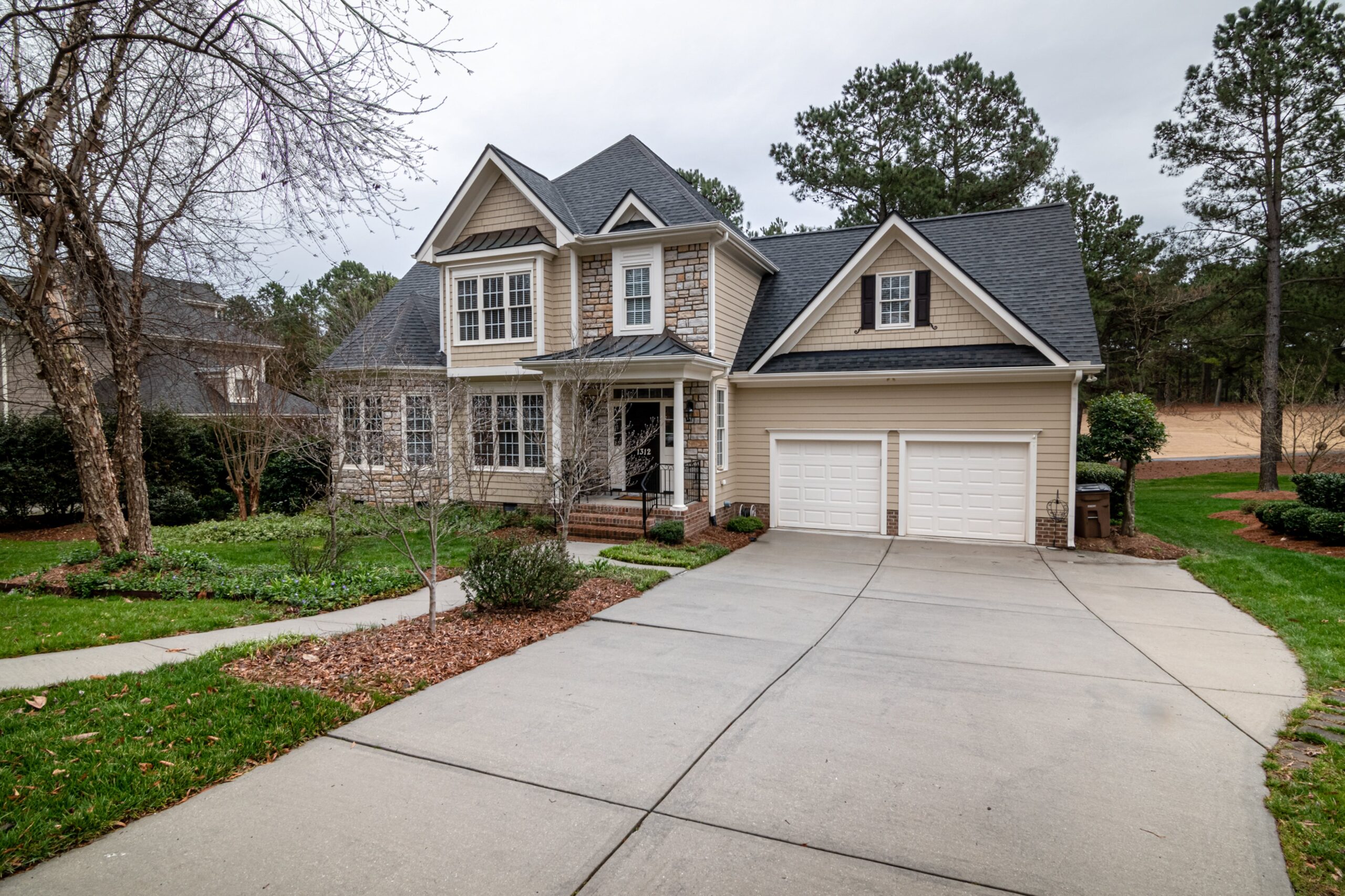
As the fall season graces us with its splendour, homeowners looking to sell their properties are presented with a unique opportunity. When listing your home this autumn, don’t underestimate the enchanting allure of curb appeal, especially during this time of year. Here are five compelling reasons why enhancing your house’s exterior with the charm of the season and cold-weather maintenance can make all the difference.
1. First Impressions: A Colorful Welcome
In the world of real estate, first impressions are paramount. The exterior of your home is the very first thing potential buyers encounter. It sets the stage for what they can expect within. Embrace the fall’s natural beauty by infusing your landscaping with rich, seasonal colours. Plant vibrant mums, ornamental cabbages, and other autumn blooms to make your home stand out in the most delightful way.
But don’t stop there. To truly captivate, consider tasteful seasonal decorations, such as pumpkins, gourds, and wreaths, adorning your porch and entryway. These vibrant accents create an immediate sense of warmth and welcome, inviting buyers to step inside.
2. Elevate Property Value: A Festive Investment
By boosting your curb appeal in the fall, you’re not only enhancing your home’s appearance but also its perceived value. This can justify a higher asking price, potentially leading to a more attractive offer. Buyers often appreciate and are willing to invest more in a property that exudes care and charm.
Take the opportunity to address any visible exterior issues like peeling paint, cracked siding, or damaged roof shingles. A well-maintained exterior not only adds to your home’s appeal but also assures potential buyers that they won’t be confronted with hidden problems.
3. Quicker Sale: Autumn’s Allure
Homes with exceptional curb appeal tend to sell more swiftly. With the fall’s shorter days, well-placed outdoor lighting becomes vital. Illuminate your home’s best features with path lights, porch lighting, and accents to create an inviting atmosphere. Solar-powered lights are energy-efficient, cost-effective, and environmentally friendly.
4. Stand Out in the Crowd: A Seasonal Advantage
In a competitive real estate market, setting your home apart is essential. A beautifully curated fall landscape and tasteful seasonal decorations add a unique dimension to your property’s charm. These touches make your home feel cozy and inviting, helping buyers envision their future within your walls.
5. Ready for Winter: Create Lasting Appeal
Should your property remain on the market into winter, preparation is key. Ensure your exterior maintains its appeal even as the snow falls. Clear pathways, driveways, and stairs for safe access. A well-maintained winter landscape can be a significant selling point, showcasing your property’s year-round desirability.
Don’t forget to focus on maintaining a warm and welcoming interior during showings. This not only makes your home more inviting but also reassures buyers that it’s comfortable and well-insulated during the colder months.
In conclusion, investing in your home’s curb appeal during the fall season is a savvy move. It creates a lasting first impression, elevates property value, leads to a quicker sale, sets your home apart from the competition, and ensures your property remains enticing throughout the winter. Don’t miss out on the unique opportunities that the fall season presents in the real estate market. Start your curb appeal enhancements today!
For more information and expert guidance on listing your home in the fall, contact the Gazeley Real Estate Group.